Have you ever trusted someone or something a little too easily, only to realize later that you’d missed some obvious warning signs?
Maybe a friend warned you, “Don’t be so naive,” after you believed a story that sounded a little too good to be true. Maybe you’ve read this word describing a character in a book who trusted the wrong person. This word shows up constantly in everyday conversation, and it carries a specific, slightly critical meaning worth understanding fully.
Understanding naive meaning helps you recognize this quality in yourself and others, and use the word accurately in conversation and writing. This guide is for students, curious readers, and anyone who has heard the word without ever getting a full explanation. By the end, you will know exactly what it means, where it came from, and how to use it correctly.
Quick Answer
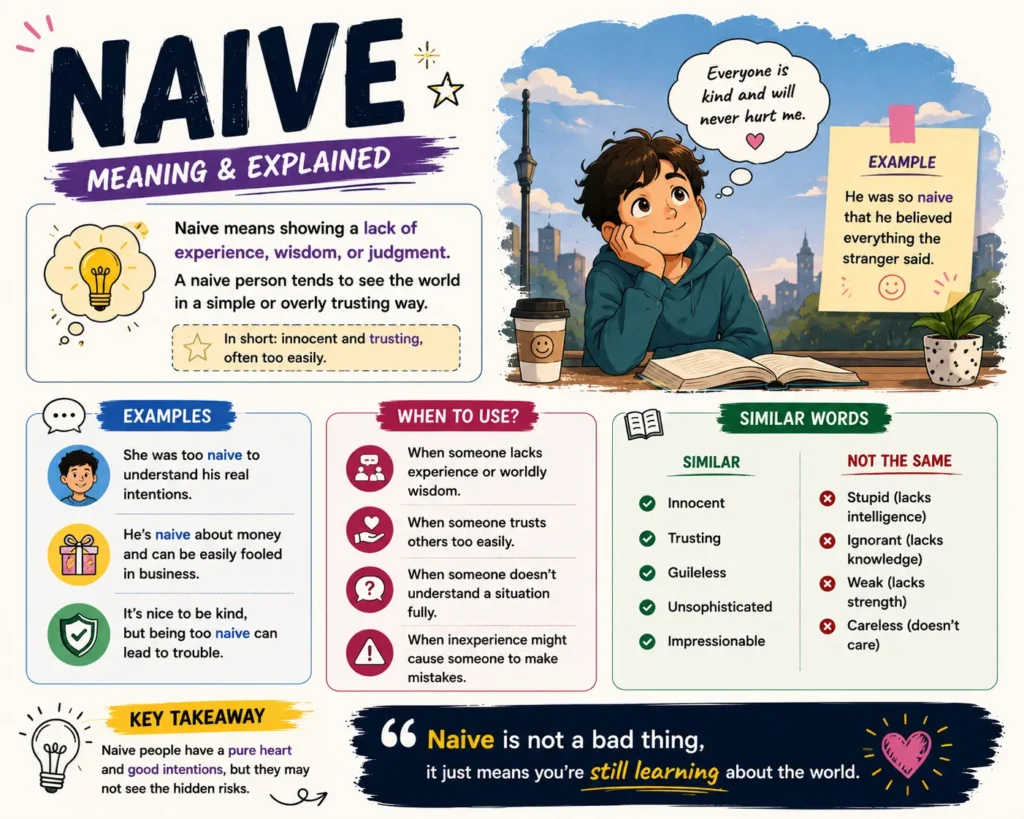
naive meaning describes someone who is overly trusting, inexperienced, or lacking the awareness to notice risks, deception, or complications that others might easily spot. It often implies innocence combined with a lack of real-world experience or caution. The word can be gentle or slightly critical, depending on context.
Table of Contents
What Does Naive Mean?
This word describes someone who trusts too easily, lacks real-world experience, or fails to notice risks, deception, or complications that others might catch right away.
It often applies to situations where someone takes something at face value, without questioning it, even when a bit more skepticism might have served them better. The word usually combines a sense of genuine innocence with a lack of caution or experience, rather than describing someone as unintelligent.
Here is an easy way to picture it. Imagine someone brand new to a job, believing every promise a coworker makes without ever double-checking anything, even when small inconsistencies pop up. That combination of genuine trust and missed warning signs captures exactly what this word describes.
It’s worth noting that this word doesn’t necessarily mean someone is unintelligent. Plenty of smart, capable people act this way in specific situations, especially ones involving something new or unfamiliar to them.
Where Does the Word Come From?
Words often carry interesting histories, and this one traces back directly to French.
It comes from the French word “naïf” (or “naïve” in its feminine form), which itself derives from the Latin word “nativus,” meaning “natural” or “native.” Originally, the word carried a more neutral meaning, closer to “natural” or “unspoiled,” before gradually shifting toward its modern sense of innocent trust or inexperience.
That French origin still shows up today in the word’s spelling, which often keeps its accent mark, “naïve,” in more formal or traditional writing, reflecting its French roots.
This Word vs Innocent: What Is the Difference?
These two words are closely related, but they carry slightly different implications.
“Innocent” generally describes a lack of guilt, wrongdoing, or exposure to negative experiences, often used in a purely positive or neutral sense. This word specifically implies a lack of caution or awareness, often suggesting that someone should have known better or noticed something important, even if their intentions were completely good.
Here is a table to help make the difference clear:
| Feature | This Word | Innocent |
| Implies missed awareness | Almost always | Not necessarily |
| Can sound slightly critical | Often, yes | Rarely |
| Focuses on trust or experience | Yes | Not specifically |
| Common setting | Decisions, trust, judgment | Guilt, wrongdoing, purity |
Both words can describe a genuine lack of worldly experience, but this word carries a slightly more critical edge, implying that a bit more caution or awareness would have served someone better.
Is This Trait Always a Bad Thing?
Not entirely, though it’s often used with a critical or cautionary tone.
Can Naivety Ever Be a Positive Quality?
In some contexts, yes. A certain amount of trust and open-mindedness can reflect genuine kindness, optimism, or a lack of cynicism, qualities many people actually admire. The word becomes more clearly negative specifically when that trust leads to real harm or when someone repeatedly ignores clear, obvious warning signs.
Examples in a Sentence
Seeing this word in real sentences helps the meaning click faster. Here are several everyday examples.
Example 1 “It was naive meaning of him to believe the stranger’s investment promise without checking any references.”
Example 2 “She had a naive, trusting outlook on life, always assuming the best in everyone she met.”
Example 3 “Looking back, I was pretty naive meaning about how difficult starting a business would actually be.”
Example 4 “The naive meaning young character in the novel trusted the villain completely, missing every warning sign along the way.”
Example 5 “It’s naive meaning to think a single email would fix months of miscommunication.”
Notice how this word almost always appears alongside a specific decision or belief that, in hindsight, involved missing something important. That pattern reflects the word’s core meaning of trust paired with a lack of awareness.
Signs of This Kind of Thinking
Sometimes it helps to see this quality broken down into clear, recognizable signs. Here are common signs of this kind of thinking.
- Taking claims or promises at face value, without asking follow-up questions.
- Ignoring or missing obvious warning signs that others might easily notice.
- Assuming the best in every situation, even when evidence suggests otherwise.
- Lacking preparation for realistic risks or complications.
- Feeling genuinely surprised when trust turns out to be misplaced.
If several of these signs show up regularly, it likely points to a pattern of this kind of thinking, rather than one isolated mistake.
Common Mistakes People Make With This Word
Even a fairly common word like this one gets misused sometimes. Here are a few mistakes worth clearing up.
Mistake 1: Assuming it means someone is unintelligent. This word describes a lack of caution or experience, not a lack of intelligence. Smart people can absolutely act this way in unfamiliar situations.
Mistake 2: Using it too harshly or dismissively. Because the word can sound critical, using it carelessly can feel unkind, especially toward someone who was simply being genuinely trusting or kind.
Mistake 3: Confusing it with simple ignorance. Ignorance describes a lack of knowledge in general. This word specifically implies a lack of caution or awareness, often in situations involving trust or judgment.
Mistake 4: Forgetting the accent mark in formal writing. The traditional spelling includes an accent mark, “naïve,” which some formal or traditional writing still uses, though the version without the accent is now extremely common too.
Expert Tips for Using It Thoughtfully
Writers and communication experts often share a few simple tips for using this word accurately and kindly.
- Use it to describe a pattern, not just one mistake. Reserve the word for a genuine lack of awareness, rather than a single unlucky decision.
- Consider your tone. Because this word can sound critical, softening it with context or explanation often keeps the description fair and balanced.
- Separate intelligence from experience. This word describes a lack of caution or exposure, not a lack of intellectual ability.
- Use it thoughtfully in storytelling. In fiction, this quality often creates meaningful character growth, as a character learns from their early mistakes.
- Avoid using it to mock genuine kindness. Trusting people isn’t automatically a flaw, even if it occasionally leads to disappointment.
These small habits help writers and speakers use the word accurately and fairly, without unfairly criticizing genuine kindness or trust.
Why Understanding This Trait Matters
Recognizing the difference between healthy trust and overly naive meaning trust helps people navigate relationships, decisions, and risks more wisely.
Understanding this balance can carry real emotional benefits, because learning from moments of misplaced trust, without becoming overly cynical, helps people build healthier judgment over time.
That idea of learning from misplaced trust connects to something bigger too. Some people carry painful lessons for years after trusting someone who didn’t deserve it, wishing they had noticed the warning signs sooner. That is exactly what The Unsent Project is about: a space where people finally share honest, unsent messages, sometimes reflecting on lessons learned the hard way.
If you are curious, you can learn how the project actually works, including how these personal messages get submitted and shared with others. Many people also ask whether the project is real, safe, and legit before getting involved, which is a fair and sensible question, especially for anyone who has been burned by misplaced trust before.
Each shared message is often paired with a color, and it turns out the colors mean something specific about the feeling behind the words. The project also has a meaningful past, and you can read about the history of The Unsent Project to see how it first began.
If this kind of honest storytelling interests you, there are also other alternatives to The Unsent Project worth exploring. And if you ever want to share your own words, you can always submit your message here.
Recognizing misplaced trust connects closely to spotting a grifter before real harm happens. Clear, honest communication looks nothing like manipulation. A quick OFC, short for “of course,” settles something instantly, while SMH shows genuine frustration honestly. A short TLDR respects someone’s time, and typing SOS is a genuine, urgent call for help. Understanding a platonic friendship, solving a personal enigma, learning what it means to be demisexual or celibate, noticing submissive or condescending behavior, checking someone’s ETA, avoiding a pedantic correction, adding an honest caveat to a promise, understanding an offer that’s contingent on something else, spotting truly diabolical intentions, valuing real fidelity in a relationship, understanding a life of reckless debauchery, naming a heavy feeling of ennui, sharing something only certain people will fully understand, saying inshallah about hopeful future plans, sending a quick wtw check-in, describing a truly surreal moment, sharing an opinion with a quick imo, staying nonchalant about big news, recognizing a sudden epiphany, or asking a simple ASL question all rely on the same basic skill: seeing situations clearly, without either too much suspicion or too little.
Frequently Asked Questions
What does naive meaning in simple words? It means being overly trusting, inexperienced, or unaware of risks or deception that others might easily notice.
Is it an insult? It can sound critical, though it doesn’t have to be unkind. It simply describes a lack of caution or worldly experience, not a character flaw.
Where does the word come from? It comes from French, originally meaning “natural” or “unspoiled,” tracing back further to a Latin word meaning “native.”
Is this trait the same as being unintelligent? No. This word describes a lack of caution or experience, not a lack of intelligence. Smart people can act this way in unfamiliar situations too.
What’s the difference between this word and innocent? Innocent describes a lack of guilt or wrongdoing, while this word specifically implies missed awareness, often suggesting someone should have noticed something.
Is it spelled naive meaning or naïve? Both spellings are used. The accented version reflects the traditional French spelling, while the version without it is now extremely common too.
Can this trait ever be a good quality? In some contexts, yes. Genuine trust and optimism can reflect kindness, though the word turns more clearly negative when that trust leads to real harm.
How can I stop being this way without becoming overly cynical? Learning from past experiences, asking follow-up questions, and staying thoughtfully cautious, without losing genuine kindness, helps strike a healthy balance.
Conclusion
Now you understand the true naive meaning: being overly trusting, inexperienced, or unaware of risks that others might easily catch.
This word carries a slightly critical edge, but it doesn’t have to describe a character flaw. The next time you notice this pattern in yourself or someone else, you’ll know exactly how to describe it, and exactly how to build a healthier balance between genuine trust and thoughtful caution.