Have you ever gotten a text that just said “wtw” and had to pause and figure out exactly what your friend was asking?
Maybe it showed up out of nowhere in a group chat. Maybe it was the opening message from someone checking in after a while. This short little text shows up constantly in casual conversation, and once you know it, you’ll never have to guess again.
Understanding wtw meaning helps you read texts, DMs, and social media messages with real confidence. This guide is for anyone who has seen the term and wanted a clear, simple answer. By the end, you will know exactly what it stands for, how to use it, and how to reply naturally.
Quick Answer
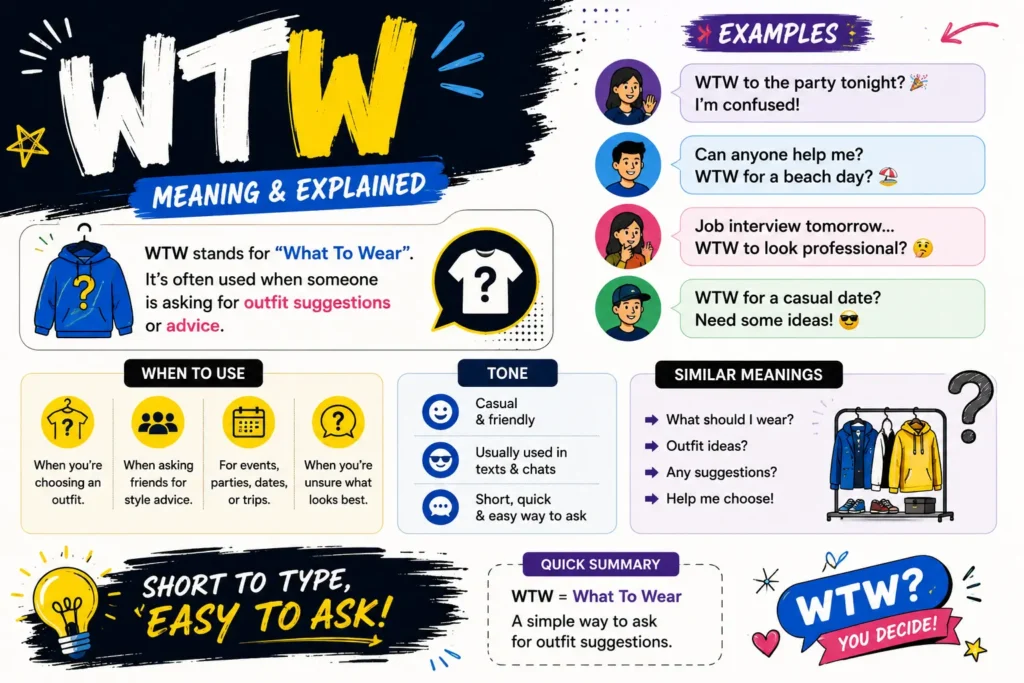
WTW meaning for “What’s the Word.” It’s a casual way of asking someone what’s going on, what’s new, or what they’re up to right now. It works a lot like “what’s up,” giving the other person an easy opening to share whatever’s on their mind.
Table of Contents
What Does WTW Stand For?
This texting abbreviation stands for “What’s the Word.”
It’s a short, casual way of asking someone what’s happening, what’s new, or simply how they’re doing right now. Think of it as a quick check-in, opening the door for the other person to share whatever’s on their mind, big or small.
Here is an easy way to picture it. Imagine a friend texts you out of nowhere with just this abbreviation. They aren’t asking anything specific. They’re simply saying, “Hey, what’s going on with you lately?” It’s casual, low-pressure, and easy to answer with as much or as little detail as you want.
It’s worth noting that this term works almost identically to “what’s up” or “what’s going on.” The exact words differ slightly, but the intention behind sending it stays essentially the same.
Where Did This Text Abbreviation Come From?
Short abbreviations like this one usually grow naturally out of texting culture, where speed and convenience shape how people communicate.
As phones and texting became a bigger part of everyday life, people started shortening common phrases to type faster, especially casual greetings and check-ins used constantly throughout the day. This particular abbreviation likely grew popular for exactly that reason: it’s quick to type, easy to recognize, and gets straight to the point.
Like many texting abbreviations, it doesn’t have one single, clearly documented origin story. Instead, it developed gradually as more people adopted it in everyday conversation, spreading naturally across texting, DMs, and social media platforms.
Is WTW Meaning the Same on Every App?
Pretty much, yes. Whether it shows up in a text message, a Snapchat chat, or an Instagram DM, this abbreviation almost always carries the same casual, check-in meaning. The platform doesn’t really change what it’s asking.
This Term vs Similar Texting Phrases
This abbreviation shares a lot in common with other casual check-in phrases, though small differences in tone do exist.
“What’s up” is the most direct, well-known equivalent, often used both as a greeting and a genuine question about someone’s current situation. “What’s good” carries a similarly casual, friendly tone, especially common in certain regions and friend groups. This particular abbreviation feels just as casual as both, but its shortened, text-friendly format makes it especially popular in fast-moving conversations.
Here is a table comparing a few similar expressions:
| Phrase | Full Meaning | Common Setting |
| WTW | What’s the word | Texting, DMs, social media |
| Wyd | What are you doing | Texting, casual check-ins |
| Sup | What’s up | Casual greetings |
| Hbu | How about you | Following up after answering a question |
All of these phrases share the same basic goal: opening up a casual conversation without needing a long, formal question.
How to Reply to This Text
Replying to a casual check-in like this one is usually simple and doesn’t require overthinking.
A short update works perfectly well, like “not much, just relaxing” or “just got back from work, you?” The goal when replying to wtw is a natural, low-pressure response, not a detailed report of your entire day.
If you’re not sure what to say, turning the question back around, like “nothing much, wtw meaning with you?”, keeps the conversation going naturally without any pressure to share more than you want to.
Examples of This Term Used in a Sentence
Seeing this abbreviation in real texts helps the meaning click faster. Here are some everyday examples.
Example 1 Text message: “hey wtw, haven’t heard from you in a bit”
Example 2 Snapchat message: “wtw, you free this weekend?”
Example 3 Group chat: “wtw meaning everyone, anything fun happening tonight?”
Example 4 Instagram DM: “omg hi! wtw, it’s been forever”
Example 5 Text reply: “not much, just chilling. wtw meaning with you?”
Notice how this abbreviation almost always appears at the start of a message, right before or after a greeting. That placement helps signal a genuine, casual check-in right from the very first word.
Common Mistakes People Make With This Text
Even a simple, common abbreviation like this one gets misused sometimes. Here are a few mistakes worth clearing up.
Mistake 1: Using it in formal messages. Like most texting shorthand, this abbreviation doesn’t fit professional emails or formal communication. Stick to spelling things out fully in those settings.
Mistake 2: Assuming it means something more serious. This is a casual, low-stakes check-in, not an urgent or emotionally loaded message. Reading too much into it can create unnecessary confusion.
Mistake 3: Overthinking how to reply. A simple, honest update is all that’s needed. There’s no need for a long, detailed response to a short, casual question like this.
Mistake 4: Confusing it with similar-looking abbreviations. Texting shorthand can look similar across different terms. Double-checking the context of a conversation helps avoid mixing this one up with something else.
Expert Tips for Using It Naturally
Communication experts and everyday texters alike tend to agree on a few simple habits that help casual check-ins like this one land well.
- Use it as a genuine, low-pressure check-in. It works best when you actually want to catch up, not just as a filler message.
- Keep your reply casual and brief. A short, honest update matches the tone of the original question.
- Pair it with a friendly greeting. Starting with “hey” or a friend’s name softens the message and makes it feel warmer.
- Don’t overuse it in every single message. Like any casual phrase, using it constantly can make it feel less genuine over time.
- Match the energy of the conversation. A quick, casual question deserves a similarly relaxed, unforced response.
These small habits help this simple check-in feel warm and genuine, rather than random or impersonal.
Why Small Check-Ins Like This Matter
Small, casual check-ins like this one carry more value than they might seem to at first glance.
Reaching out with a quick, low-pressure message can carry real emotional benefits, because staying in touch, even briefly, helps maintain real connection between busy, distracted lives.
That idea of staying connected ties into something bigger too. Some people wish they had reached out more often, or wonder what might have happened if they’d sent one more simple check-in message before losing touch with someone. That is exactly what The Unsent Project is about: a space where people finally share honest, unsent messages, sometimes as simple as wishing they’d checked in one more time.
If you are curious, you can learn how the project actually works, including how these personal messages get submitted and shared with others. Many people also ask whether the project is real, safe, and legit before getting involved, which is a fair and sensible question.
Each shared message is often paired with a color, and it turns out the colors mean something specific about the feeling behind the words. The project also has a meaningful past, and you can read about the history of The Unsent Project to see how it first began.
If this kind of honest storytelling interests you, there are also other alternatives to The Unsent Project worth exploring. And if you ever want to share your own words, you can always submit your message here.
Plenty of other short texting phrases carry that same easy, connective spirit. A quick OFC, short for “of course,” settles something instantly, while SMH captures shared frustration in three letters. A short TLDR respects someone’s time, and typing SOS instantly signals urgency to someone who cares. Understanding a platonic friendship, solving a personal enigma, learning what it means to be demisexual or celibate, noticing submissive or condescending behavior, checking someone’s ETA, avoiding a pedantic correction, adding an honest caveat to a promise, understanding an offer that’s contingent on something else, spotting truly diabolical intentions, valuing real fidelity in a relationship, recognizing a grifter before it’s too late, understanding a life of reckless debauchery, naming a heavy feeling of ennui, sharing something only certain people will fully understand, saying inshallah about hopeful future plans, or asking a simple ASL question all rely on the same basic idea: small, genuine words that keep people connected.
Frequently Asked Questions
What does WTW Meaning stand for? It stands for “What’s the Word,” a casual way of asking what’s going on or what’s new with someone.
Is it the same as “what’s up”? Yes, essentially. Both phrases work as casual, low-pressure check-ins, asking what’s happening in someone’s life right now.
How should I reply to it? A short, honest update works well, like sharing what you’re currently doing, followed by asking the same question back.
Is it only used in texting? No. It’s common across texting, Snapchat, Instagram DMs, and other social media platforms, not just standard text messages.
Does it mean something urgent or serious? No. It’s a casual, relaxed check-in, not an urgent or emotionally loaded message.
Can I use it to start a conversation with someone I haven’t talked to in a while? Yes, it’s actually a common, natural way to reconnect casually after some time apart.
Is it okay to use it in a professional setting? It’s best kept casual. Like most texting shorthand, it doesn’t fit formal emails or professional communication well.
What’s the difference between this abbreviation and WYD? wtw meaning asks generally what’s going on, while WYD specifically asks what someone is doing right at that moment.
Conclusion
Now you understand the true wtw meaning: “What’s the Word,” a casual, friendly way of checking in and asking what’s going on with someone.
This small, simple text carries real value, keeping people connected through quick, low-pressure check-ins. The next time you see it pop up in a message, or want to reach out to someone yourself, you’ll know exactly what it means, and exactly how easy it is to reply.