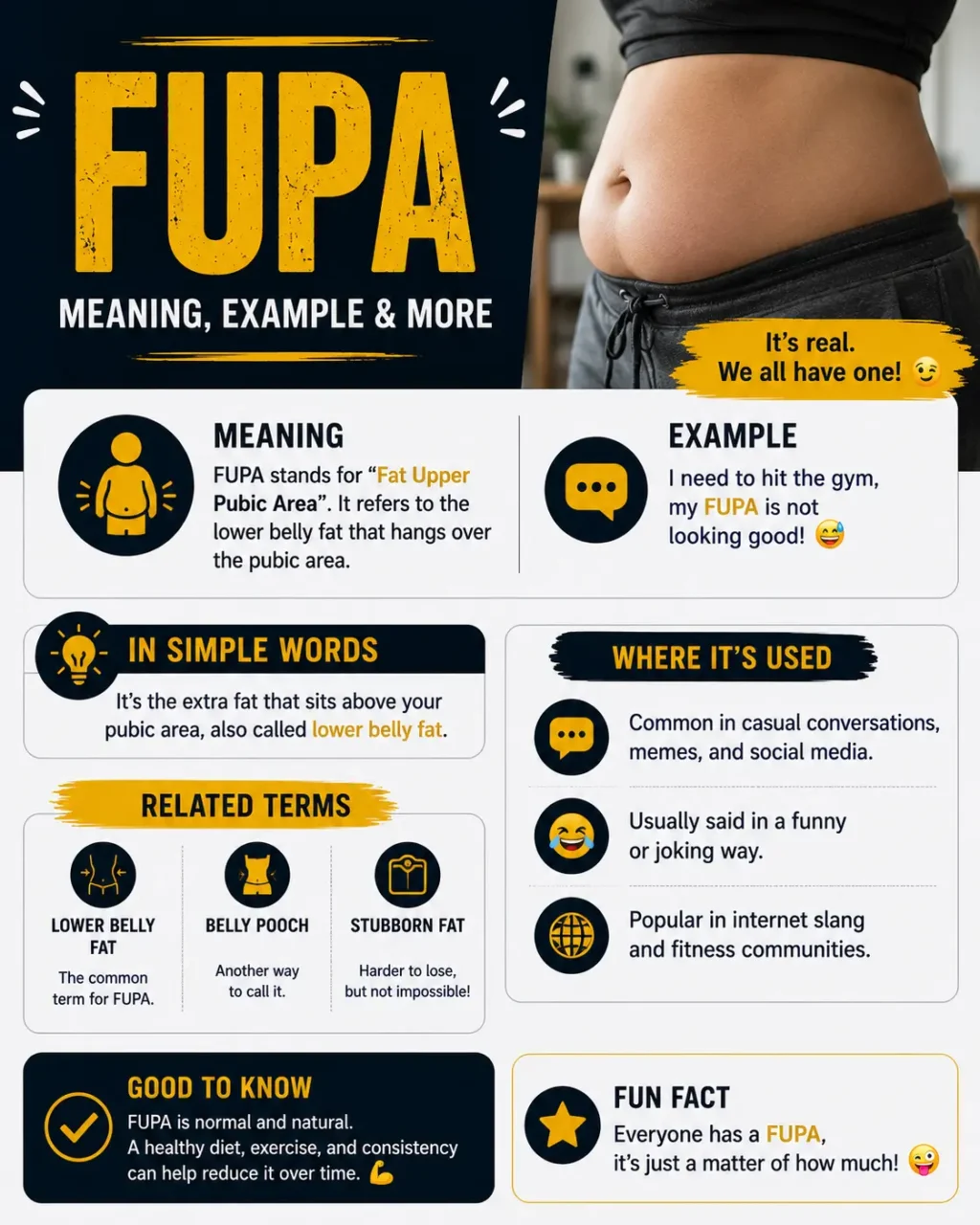
You may have heard the word “FUPA” online or from a friend, and wondered what it actually means. The fupa meaning is simpler than the word sounds, and understanding it can help you feel more informed and less confused about your own body.
This guide is for anyone curious about this term, whether you heard it in a joke, saw it in a video, or noticed the area on your own body and wanted real answers. It’s written for people who want facts, not judgment.
By the end, you will know what fupa meaning, why it happens, and what your options are if you ever want to address it. You will also learn what is simply a normal part of having a body.
Quick Answer
Fupa meaning, in short: fupa meaning stands for “fatty upper pubic area.” It describes the soft, rounded area of skin and fat just above the pubic bone, below the belly button. It’s extremely common, affects people of all body types, and is not a medical condition on its own. It can change with weight, age, pregnancy, or genetics.
Table of Contents
What Does FUPA Actually Mean?
FUPA is short for “fatty upper pubic area.” Some people also say it stands for “fat upper pubic area.” Either way, the fupa meaning points to the same spot on the body.
This area sits right above the pubic bone, below the lower belly. It’s made of skin, and a layer of fat that sits under the skin. Everyone has this layer of fat to some degree. It cushions the pubic bone and protects nearby organs.
The word became popular as internet slang, mostly used in a joking or self-deprecating way. But the area itself is a totally normal part of human anatomy. Doctors sometimes call it the “mons pubis” when talking about it in a medical setting.
Knowing the real fupa meaning helps take some of the mystery, and the shame, out of the word. It’s just a body part, not a flaw.
Why Do People Develop a FUPA?
Many different things can make this area look more noticeable. It’s rarely caused by just one thing.
Genetics. Where your body stores fat is largely decided by your genes. Some people naturally store more fat in the lower belly area, no matter how much they exercise.
Weight changes. Gaining weight can add fat to this area, just like it can anywhere else on the body. Losing weight can shrink it, but not always completely.
Pregnancy. During pregnancy, the body naturally stores extra fat in the lower belly to support the growing baby. After childbirth, skin and tissue in this area can stay stretched or loose for a while.
Age. As people get older, skin loses some of its natural elasticity. This can make the area look softer or more visible, even without weight gain.
Hormones. Hormone changes, including those from menopause or certain health conditions, can shift where the body stores fat.
Notice that this list includes things people cannot control, like genetics and age. That’s an important part of the real fupa meaning: it’s often about biology, not effort or laziness.
Is a FUPA a Medical Problem?
No. Having a FUPA is not a disease, illness, or medical condition. It’s a normal variation in body shape, just like having wider hips or a rounder face.
Doctors don’t diagnose someone “with” a FUPA. It’s simply a body area, and having extra softness or fullness there is common at every age and body size.
That said, if someone experiences pain, skin irritation, or sudden changes in this area, it’s worth mentioning to a doctor. Those symptoms usually point to something else, like a skin issue or hernia, rather than the fat itself.
Signs You Might Notice
People usually notice a FUPA by sight or by how clothing fits, rather than through any symptom. Common things people mention include:
- A soft, rounded shape below the belly button and above the pubic area.
- Clothes, like jeans or swimsuits, feeling tighter in that spot.
- The area looking more noticeable when sitting compared to standing.
- Skin that feels a bit looser after weight loss or pregnancy.
None of these signs mean something is wrong with your health. They’re simply physical observations, similar to noticing any other part of your shape.
Non-Surgical Ways to Reduce a FUPA
For people who want to change how this area looks, several non-surgical options exist. None of them offer instant results, and results vary a lot from person to person.
General movement and strength habits. Regular physical activity that you enjoy, combined with balanced eating patterns, can support overall body composition over time. There’s no way to “spot reduce” fat from just one area, including this one.
Hydration and skin care. Keeping skin moisturized can support its natural elasticity, though it won’t remove fat underneath.
Posture and core strength. Building core strength can improve posture, which sometimes changes how this area appears, without changing the fat itself.
Patience. Because fat loss happens across the whole body, not one specific spot, changes in this area usually happen gradually alongside overall changes.
It’s worth remembering that no cream, wrap, or gadget can remove fat from one exact area. Anyone promising instant spot reduction is not describing a real, proven method.
Surgical Options for a FUPA
Some people choose surgery if they want a more noticeable, faster change. This is a personal decision, and it’s not necessary for health reasons.
Liposuction. This procedure removes fat cells from a targeted area using a thin tube. It can reduce fullness, but it does not remove loose skin.
Tummy tuck (abdominoplasty). This surgery removes excess skin and tightens the muscles underneath. It’s often considered by people with loose skin after major weight loss or pregnancy.
Panniculectomy. This procedure removes excess hanging skin and tissue, and is sometimes recommended for medical reasons, such as skin irritation that doesn’t improve with other treatment.
Any surgery comes with real risks, including infection, scarring, and reactions to anesthesia. A board-certified surgeon can explain which option, if any, fits a person’s goals and health history. Surgery should always follow a real conversation with a qualified medical professional, not just online research.
What Recovery Looks Like After Surgery
Recovery time depends on the type of procedure. In general, here’s what many people can expect:
- The first few days. Swelling, soreness, and limited movement are common right after surgery.
- The first two weeks. Most people need to avoid heavy lifting and strenuous activity during this time.
- Four to six weeks. Many people gradually return to normal daily activities, following their surgeon’s specific guidance.
- Several months. Final results usually become clearer as swelling fully goes down and scars continue to fade.
Every recovery timeline is different. Following a surgeon’s personal aftercare instructions matters more than any general timeline found online.
Common Mistakes and Myths About FUPA
A few misunderstandings come up again and again. Clearing them up can prevent wasted time, money, and stress.
Mistake: Believing exercise can target this one area. Spot reduction isn’t possible. Sit-ups alone won’t remove fat from this specific spot.
Myth: Only people who are overweight have a FUPA. Not true. People at every size and fitness level can have this area, since it’s partly shaped by genetics and skin structure.
Myth: Surgery is the only real solution. Not true. Many people never treat it at all, and that is a completely valid choice. Body shape doesn’t need to be “fixed” to be normal.
Mistake: Trusting products that promise fast fat loss in one spot. No cream, belt, or supplement can remove fat from a single body part. Claims like this are not supported by real evidence.
Expert Tips for a Healthy Approach
Doctors and body-image specialists often share similar advice when this topic comes up.
- Focus on how you feel, not just how you look. Overall health habits matter more than the shape of one small area.
- Talk to a real doctor before trying any product or procedure. They can separate safe options from marketing claims.
- Give your body time. Changes from exercise, weight shifts, or skin elasticity happen slowly, not overnight.
- Remember this area is common and normal. Nearly everyone has some fullness here; it’s simply more visible on some bodies than others.
These simple habits protect both your body and your mental well-being while you make any decisions about this area.
Comparing FUPA to Other Common Body Areas
It helps to see how the fupa meaning compares to a few other terms people search for when talking about body shape. This isn’t about ranking body parts, just making sure the vocabulary is clear.
| Term | What It Refers To | Location |
| FUPA | Fat and skin above the pubic bone | Lower belly, below the belly button |
| Belly fat | Fat around the midsection | Around and above the belly button |
| Love handles | Fat along the sides of the waist | Sides of the torso |
| Muffin top | Fat that spills over waistbands | Around the waist, above pants |
Each of these terms describes a different area, and none of them describe a medical problem on their own. They’re simply everyday words people use to talk about body shape.
When to Talk to a Doctor
Most of the time, this area needs no medical attention at all. But it’s worth checking in with a doctor if you notice:
- Sudden swelling that appears without an obvious cause.
- Pain, redness, or warmth in the area.
- A lump that feels firm or doesn’t move under the skin.
- Skin that becomes irritated, cracked, or infected in folds of the area.
These signs usually point to something separate from normal fat storage, such as a skin infection or a hernia. A doctor can check quickly and put your mind at ease either way.
Explore More Word Meanings
If understanding the fupa meaning helped clear things up, you might enjoy learning other words and phrases people search for online. Here are a few related guides:
- Curious about grammar mix-ups? Read about their meaning.
- Want to understand texting shortcuts? Check out SMS meaning, ASL meaning, and OFC meaning.
- Interested in relationships and feelings? Try platonic meaning, solace meaning, and epiphany meaning.
Frequently Asked Questions
What does FUPA stand for? FUPA stands for “fatty upper pubic area.” It refers to the soft area of skin and fat above the pubic bone.
Is having a FUPA unhealthy? No. It’s a normal part of human anatomy and isn’t a sign of poor health on its own.
Can exercise get rid of a FUPA completely? Exercise supports overall fitness, but it cannot remove fat from just one spot. Genetics and skin elasticity also play a role.
Does everyone have a FUPA? Most people have some fullness in this area, though it looks different depending on body type, age, and genetics.
What is the difference between FUPA and belly fat? Belly fat usually refers to fat around and above the belly button. A FUPA specifically refers to the area below the belly button, just above the pubic bone.
Does pregnancy always cause a FUPA? Not always, but pregnancy commonly changes fat storage and skin elasticity in this area for many people.
Is surgery the best treatment for FUPA? Surgery is one option, not the only one, and it’s never required. Many people choose to leave the area untreated, and that’s a completely healthy choice.
How long does recovery take after FUPA surgery? Recovery timelines vary by procedure, but many people need a few weeks before returning to normal activity, and several months before seeing final results.
Takeaways
The real fupa meaning is simple: it’s a normal, common area of the body located above the pubic bone. It can change because of genetics, weight, pregnancy, age, or hormones, and it isn’t a sign of poor health.
Whether you choose to address it through daily habits, consider a medical procedure, or simply leave it alone, the choice is personal. Understanding the fupa meaning clearly is the first step toward making that choice with confidence. Talk to a qualified doctor before starting any treatment, and remember that this is a completely normal part of having a human body.