Quick Answer
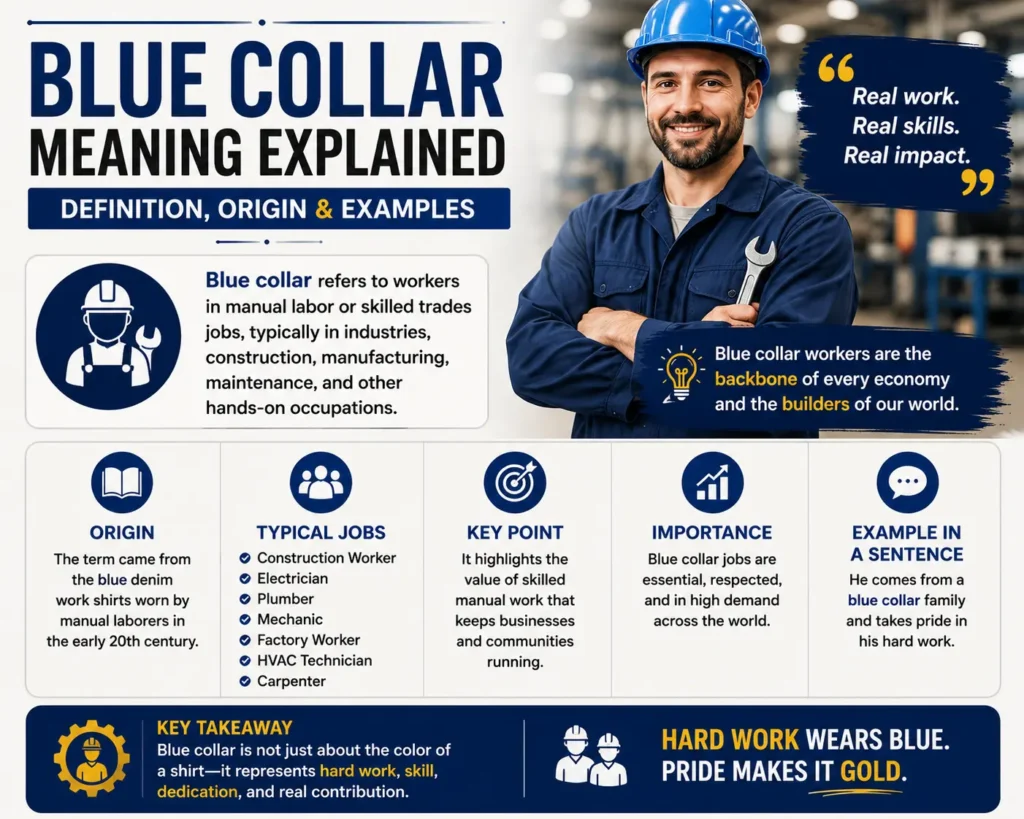
The blue collar meaning refers to jobs that involve physical, hands-on work, like building, fixing, or making things. Blue-collar workers include electricians, plumbers, and mechanics. The term comes from the blue work shirts these workers often wore in the past.
Table of Contents
What Does Blue Collar Mean?
Have you ever heard someone described as a “blue-collar worker” and wondered what that means? A lot of people search for the blue collar meaning because it’s a common phrase, but it isn’t always explained clearly.
Here’s the simple answer. Blue collar describes jobs that involve physical work with your hands. Think of electricians, plumbers, construction workers, and mechanics. These jobs usually involve building, fixing, moving, or making things.
This guide is for job seekers, students, and anyone curious about the term. Maybe you saw it in a news article. Maybe someone used it to describe their job. Whatever the reason, you’ll learn exactly what it means and how it’s used today.
By the end of this guide, you will know:
- What blue collar means
- Where the phrase comes from
- How it compares to other job categories
- Real examples of blue-collar jobs
- Skills needed to succeed in these careers
Let’s start with where the phrase came from.
Where Does the Term Blue Collar Come From?
The phrase blue collar comes from clothing, not attitude or skill. In the early 1900s, many workers in factories, farms, and construction sites wore sturdy blue shirts. Blue was practical. It didn’t show dirt and stains as easily as lighter colors.
Over time, people started using “blue collar” to describe the type of work itself, not just the shirt color. It became a simple way to separate hands-on, physical jobs from office jobs.
Around the same time, the phrase “white collar” appeared too. Office workers often wore white dress shirts, since their jobs didn’t involve heavy dirt or grease. The two terms grew side by side, and both are still used today.
Blue Collar vs. White Collar vs. Pink Collar
You may have also heard the terms “white collar” and “pink collar.” Here’s a simple comparison to help you understand the differences.
| Type | Type of Work | Common Jobs |
| Blue Collar | Physical, hands-on work | Electrician, plumber, welder, mechanic |
| White Collar | Office-based, often desk work | Accountant, lawyer, manager |
| Pink Collar | Often service or care-based work | Nurse, teacher, receptionist |
These categories aren’t about which job is more important. They simply describe different types of work environments and tasks. Many workplaces today rely on all three types working together.
Common Blue-Collar Jobs
Blue-collar jobs exist in almost every industry. Here are some of the most common examples.
- Electrician – installs and repairs electrical systems
- Plumber – installs and fixes pipes and water systems
- Welder – joins metal parts together using heat
- Construction worker – builds and repairs buildings and roads
- Mechanic – repairs vehicles and machines
- Truck driver – transports goods across long distances
- Machinist – operates machines that shape metal or other materials
- HVAC technician – installs and repairs heating and cooling systems
These jobs share one thing in common. They all require hands-on skills and often take place outside of a traditional office.
Skills You Need for Blue-Collar Work
Blue-collar careers rely on a mix of physical and mental skills. Here are the main ones employers look for.
1. Mechanical skills. Understanding how machines, tools, and systems work is essential in many blue-collar jobs.
2. Technical skills. Some jobs require reading blueprints, using specialized equipment, or following technical manuals.
3. Problem-solving skills. Blue-collar workers often need to figure out what’s wrong and fix it quickly and safely.
4. Physical ability. Many jobs require strength, stamina, and the ability to stand or move for long periods.
5. Safety awareness. Following safety rules is critical, especially when working with tools, electricity, or heavy machines.
How to Start a Blue-Collar Career
If you’re interested in blue-collar work, here’s a simple path to follow.
Step 1: Research potential careers. Look into different blue-collar jobs to see which ones match your interests and strengths.
Step 2: Identify and evaluate your skills. Think about what you’re already good at, like fixing things, working with your hands, or solving problems.
Step 3: Pursue training and certifications. Many blue-collar jobs require trade school, apprenticeships, or specific certifications rather than a four-year college degree.
Step 4: Apply to open positions. Once you have the right training, start applying to jobs and gaining hands-on experience.
Many blue-collar careers also offer on-the-job training, which means you can learn and earn at the same time.
Myths About Blue-Collar Jobs
There are a few common myths about blue-collar work that aren’t accurate.
Myth 1: Blue-collar jobs don’t pay well. Many skilled trades, like electricians and welders, can pay very competitive wages, especially with experience and certifications.
Myth 2: Blue-collar jobs don’t require training. Many require specialized training, licenses, or apprenticeships that can take months or years to complete.
Myth 3: Blue-collar work is less important than office work. Both types of work are essential. Blue-collar workers build, repair, and maintain the systems that keep everyday life running.
Examples of Blue Collar in a Sentence
Seeing a phrase in real sentences makes it easier to understand. Here are a few examples.
- My uncle has worked a blue-collar job as an electrician for over ten years.
- The town relies heavily on blue-collar industries like construction and manufacturing.
- She chose a blue-collar career path because she enjoys hands-on work.
- Many blue-collar jobs offer strong pay once you gain experience and certifications.
Common Mistakes People Make
Even people familiar with the term sometimes misunderstand parts of it. Here are common mistakes.
Mistake 1: Assuming blue collar means low-skill work. Many blue-collar jobs require years of training and specialized knowledge.
Mistake 2: Thinking blue collar and white collar are about pay. The terms describe the type of work, not how much someone earns.
Mistake 3: Believing blue-collar careers have no growth opportunities. Many blue-collar workers move into supervisory or business-owner roles over time.
Expert Tips for Blue-Collar Careers
- Look into apprenticeships. They let you earn money while learning a trade.
- Get certified early. Certifications can boost your pay and job options.
- Focus on safety training. Employers value workers who understand safety procedures well.
- Build a specialty. Standing out in a specific skill, like industrial wiring or diesel engines, can lead to higher pay.
Frequently Asked Questions
1. What is the simplest way to explain the blue collar meaning? Blue collar refers to jobs involving hands-on, physical work, like construction, repair, or mechanical trades.
2. Where does the term blue collar meaning come from? It comes from the blue work shirts many laborers wore in the early 1900s, since the color hid dirt and stains well.
3. Are blue-collar jobs the same as low-paying jobs? No. Many blue-collar careers, especially skilled trades, offer strong pay and benefits.
4. What’s the difference between blue collar meaning and white collar? blue collar meaning involves hands-on physical work, while white collar usually involves office-based tasks.
5. Do blue-collar jobs require a college degree? Most don’t require a four-year degree. Many rely on trade school, certifications, or apprenticeships instead.
6. What is an example of a blue-collar job? Electricians, plumbers, welders, and mechanics are common examples.
7. Can blue-collar workers earn a good income? Yes. Many skilled trades offer competitive pay, especially with experience and specialized certifications.
8. Is blue-collar work physically demanding? Often, yes. Many blue-collar jobs require strength, stamina, and the ability to work with tools or machinery.
Conclusion
So, what is the blue collar meaning? It describes jobs built around physical, hands-on work, from electricians to construction workers to mechanics. The term traces back to the blue shirts many laborers once wore, and today it represents a wide range of skilled, essential careers.
If you’re exploring career options, blue-collar work offers real opportunities for training, growth, and strong pay. The next step is simple: research the trade that interests you most, and look into the training or certification path that can get you started.